Home › Sitework and Structural Concrete
Complete your project with structural concrete in Sugar Land, TX for sitework, walls, and equipment foundations. We install pads, piers, pedestals, and retaining structures to support mechanical units, tanks, and site features. Our team follows engineered details and coordinates with other trades for accurate embeds and anchor layouts.
Superior Concrete Sugar Land provides professional structural concrete throughout Sugar Land, TX, Texas and the surrounding area. Our licensed, insured crew delivers safe, clean, on-time work with a free estimate before anything begins. Call (346) 642-5160 or request your free quote.
Sitework and structural concrete for Sugar Land properties
Sitework and structural concrete are what make everything else on your property work properly. Before a slab, driveway, foundation, or building frame goes in, the site has to be graded, utilities routed, and the concrete support system planned for local soil and water conditions. At Superior Concrete Sugar Land, we focus on getting those early stages right so you are not fighting cracks, drainage issues, or settlement a few years down the road.
In Sugar Land and the surrounding Fort Bend County area, expansive clay soils and flat lots are the norm. That means water does not run off on its own and the soil swells and shrinks with moisture. Good sitework and structural concrete are about managing that movement and controlling where water goes. Whether you are building a new house slab, a shop, a small commercial building, or adding a garage, we start by looking at the soil, the lot slope, and how nearby structures and drainage ditches will affect your project.
How we handle sitework: grading, drainage, and utilities
Every sitework job starts with a layout walk. We stake building corners, driveway paths, and any flatwork, then mark existing utilities so nothing is hit during excavation. For Sugar Land neighborhoods with smaller lots, like those off Highway 6 or near First Colony, we pay close attention to property lines and existing fences, and we coordinate with you on access for equipment.
Grading is where problems are often created or prevented. We shape the lot so water flows away from the structure at a minimum of 2 percent slope where space allows. On tight lots, we may use swales (shallow grass channels) to move water between homes toward the street or a drainage inlet. If your home backs up to a bayou, detention pond, or greenbelt, we plan grades so heavy rains do not send water back toward the slab.
For soft or disturbed soils, we may undercut and remove several inches of poor material, then bring in select fill or crushed concrete base and compact it in layers with plate compactors or rollers. In parts of Sugar Land that were built on former fields, we often see spongy topsoil or buried organic material that needs to come out or be compacted properly to avoid future settlement.
Utility coordination is another part of sitework. If we are pouring structural concrete for a new build or addition, we work with your plumber and electrician to set sleeves, conduits, and stub ups before concrete is placed. That way, there is no need to chip through a new slab later to run a drain line or power feed.
What structural concrete really involves
Structural concrete is concrete that carries loads, not just a surface to walk or drive on. In Sugar Land, this typically includes slab on grade foundations, grade beams, piers, structural driveways for heavier vehicles, and supports for patios or outdoor kitchens that tie into the main structure.
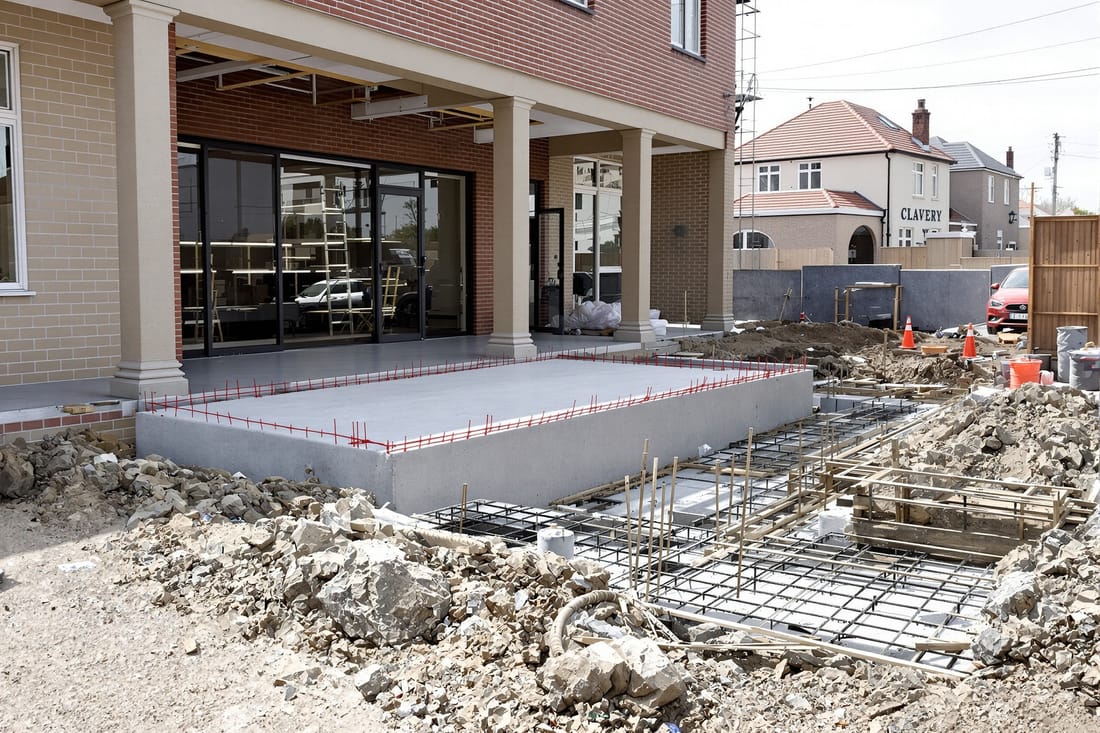
Once the site is graded and compacted, we set form boards to exact elevations based on the engineered plan. For structural slabs, we follow a design from a Texas licensed engineer, which specifies slab thickness, beam layout, and reinforcement. Many homes in this area use post tension slabs, which rely on high strength steel cables. We install the cable layout, chairs, and edge forms according to the drawings, then schedule the stressing after the concrete reaches the specified strength.
For conventionally reinforced structural concrete, such as thicker commercial slabs, grade beams, or pier caps, we place rebar cages tied with wire and supported on chairs so the steel sits in the correct position in the slab. We pay particular attention to rebar around column locations, heavy equipment pads, and garage entrance areas where loads are higher and cracking is common.
Concrete mix design is not one size fits all. For structural work in Sugar Land, we generally use a 3000 to 4000 psi mix, adjusted for temperature and placement method. In hotter weather, we often request retarder admixtures so the concrete does not set too fast, which gives us enough time to properly place and finish it and reduces the risk of cold joints on larger pours. For areas that may see chemical exposure, such as commercial loading zones, we can specify air entrainment or low permeability mixes to improve durability.
During placement, we vibrate the concrete around rebar and inside forms to remove air pockets, especially in beams and piers. This step is often skipped on non structural pours, but it is critical for load bearing members. After screeding and leveling, we use bull floats, trowels, and where appropriate, power trowels to achieve the right finish. For structural surfaces that will receive flooring or epoxy, we avoid over finishing so adhesives bond properly.
Common issues in Sugar Land and how we prevent them
Our soil and weather in Sugar Land create some predictable problems for structural concrete. The most common issues we see are cracking, slab movement, and drainage failures that show up a year or two after the project is finished.
Cracks cannot be eliminated entirely, but they can be controlled. We use a combination of proper joint spacing, reinforcement, and curing methods to keep cracks hairline and in planned locations. For example, on a large structural driveway, we cut control joints in a grid pattern based on slab thickness, usually within 12 to 24 times the slab depth. We also saw cut joints within 6 to 12 hours after placement, depending on temperature, to avoid random cracking.
Slab movement is tied to the clay soils under and around the concrete. We help limit this by preparing a uniform subgrade, removing soft spots, and following engineered designs that use beams and piers to carry loads down to more stable soil when needed. Around the slab, we encourage customers to maintain even moisture by using gutters, avoiding overwatering landscaping right against the foundation, and keeping grade slopes intact.
Drainage failures often show up first as standing water near porches, patios, and garage doors. During sitework, we set elevations to keep finished concrete at least several inches above surrounding grade and we plan water paths to safe discharge points. In older Sugar Land neighborhoods where existing grades are already marginal, we may recommend adding area drains or French drains that tie into storm inlets or discharge toward the street.
Curing is another area where shortcuts cause problems. Structural concrete needs moisture retention for several days to gain strength and reduce surface cracking. We typically use a curing compound applied right after finishing, and on larger or more critical slabs we may add wet curing with poly sheeting or consistent light watering to keep the surface from drying too fast in the Texas sun.
What affects cost and how to hire the right contractor
Structural concrete and sitework pricing in Sugar Land is driven by a few key factors: access for equipment, soil conditions, thickness and reinforcement requirements, and the complexity of the formwork. A simple rectangular slab with good truck access on firm ground will cost less per square foot than a job in a tight backyard that requires pumping concrete over a house and hauling out wet spoil with smaller machinery.
Soil issues can add to cost, but handling them early is cheaper than repairing structural problems later. If our initial inspection or an engineer's report shows poor load bearing soil, we will price in undercutting, imported select fill, or drilled piers or belled piers under grade beams. We are upfront about these options so you can decide whether to adjust the project scope or invest in the more robust design.
Material choices such as higher strength concrete, epoxy coated rebar, or thicker sections for heavy loads will also change the budget. Superior Concrete Sugar Land walks you through where an upgrade actually matters, for example a structural RV pad or a workshop slab that will hold a lift, and where a standard design is sufficient.
When you are comparing contractors for sitework and structural concrete, ask for three things: who is responsible for following the engineered design, what is the plan for drainage around the slab, and how will they handle curing. Ask to see examples of similar projects in Sugar Land, not just generic photos. A reputable contractor should be able to explain how their work holds up in local clay soils and heavy rain events.
Superior Concrete Sugar Land provides written scope, plan references, and a clear schedule before work starts. We coordinate with your engineer, builder, or architect and keep you informed at each phase, from layout to final pour. That way you know exactly what is in the ground under your home, shop, or commercial building and you can count on that structural concrete for the long term.