Home › Commercial Concrete Foundations and Footings
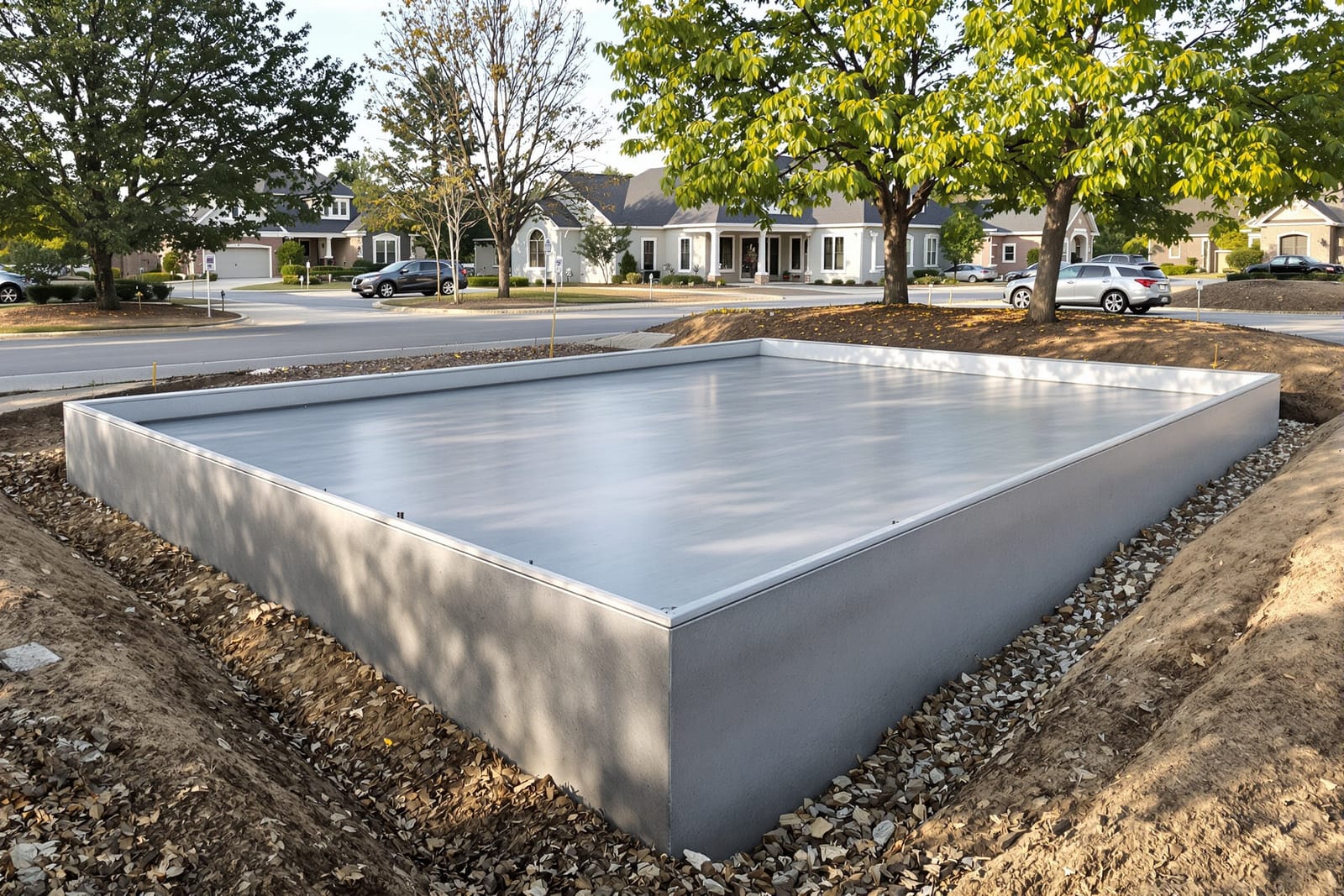
Get reliable support for your structure with commercial concrete foundations in Sugar Land, TX. We install spread footings, grade beams, pilasters, and foundation walls to engineered specifications. Our team coordinates with your GC and engineer to ensure reinforcing, anchor bolts, and elevations are correct before the pour.
Superior Concrete Sugar Land provides professional commercial concrete foundations throughout Sugar Land, TX, Texas and the surrounding area. Our licensed, insured crew delivers safe, clean, on-time work with a free estimate before anything begins. Call (346) 642-5160 or request your free quote.
Commercial Concrete Foundations Built for Sugar Land Businesses
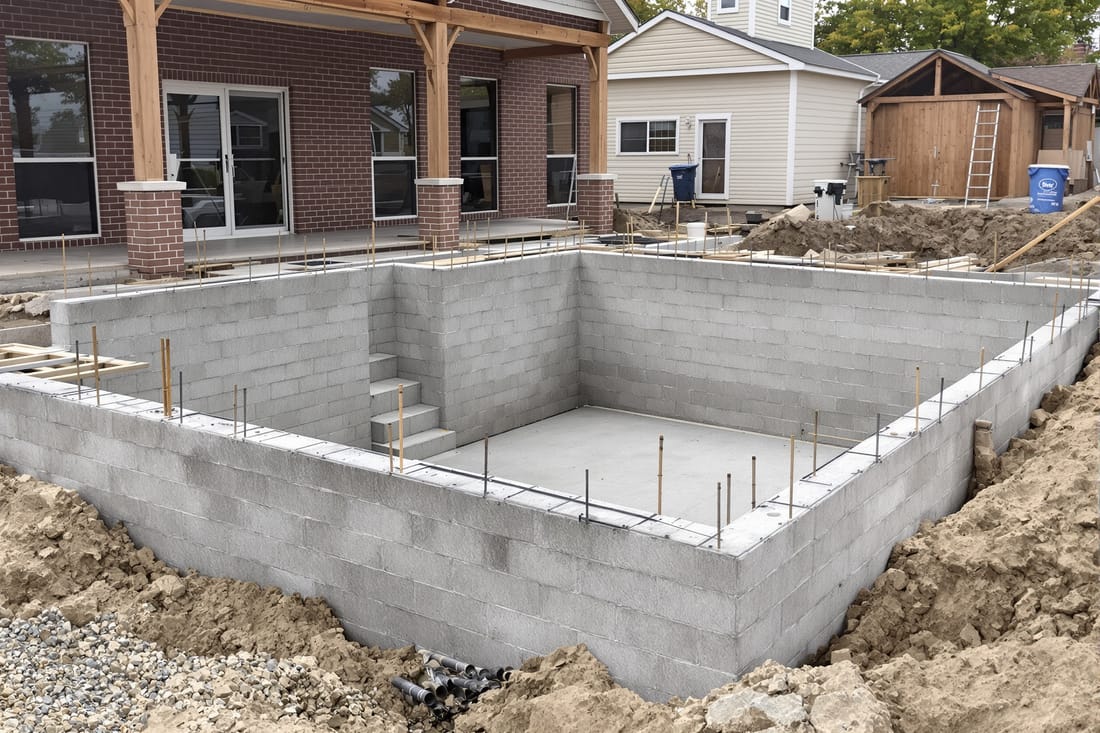
Commercial concrete foundations are the structural backbone of your building, and in the Fort Bend County soil and climate they have to be designed very carefully. At Superior Concrete Sugar Land, we focus on foundations and footings that match your specific use, whether you are planning a medical office, restaurant, warehouse, tilt wall building, retail center, or light industrial facility.
Our team starts every project with your site and your building type, not a template. For a retail or office building on a busy Sugar Land corridor, we often recommend slab on grade with thickened edge beams and interior grade beams to control cracking and movement. For heavier uses, such as distribution or manufacturing, we look at higher concrete strengths, thicker slabs, doweled joints, and wider spread footings or combined footings to carry point loads from heavy columns, pallet racking, or machinery.
Local conditions matter. Sugar Land soils often include expansive clays that swell and shrink with moisture. If these are not handled correctly, you see differential settlement, uneven floors, and cracks in walls and storefront glass. We address this at the foundation design stage through geotechnical coordination, proper footing depth, select fill or lime stabilization when needed, and reinforcement layouts that anticipate movement instead of simply reacting to it years later.
Our Process for Reliable Commercial Footings and Slabs
When you contact Superior Concrete Sugar Land for commercial concrete foundations, we walk you through a clear process so you know exactly what to expect in terms of schedule, inspections, and site disruption.
1. Geotechnical and plan review. We review your soils report, structural drawings, and architectural plans. If you do not have a soils report yet, we help coordinate one with a local geotech familiar with Sugar Land and Missouri City subsurface conditions. We verify allowable bearing pressures, groundwater conditions, and recommended footing depths before pricing anything.
2. Layout and excavation. Our crews stake out footing locations using survey control so column centers and gridlines match your structural plans. We then excavate footings and grade beams to the specified depth, typically below the seasonal moisture zone for expansive clays. On tight sites, such as business parks off Highway 6 or US 59, we schedule excavation to minimize interference with neighboring tenants and traffic.
3. Subgrade prep. We compact the subgrade with vibratory rollers or plate compactors, then place select fill or crushed concrete base as required. In areas prone to soft spots, we proof roll and correct failures before any rebar is placed. This step is critical in local clay soils that soften quickly after heavy rain.
4. Reinforcement and embeds. Our team installs rebar cages, continuous bottom and top bars, stirrups, and slab reinforcement per the structural drawings. Anchor bolts, column base plate templates, conduit stubs, plumbing sleeves, and hold downs are set in place so they are locked into the concrete. We double check anchor bolt patterns against steel shop drawings to avoid steel erection delays.
5. Concrete placement and finishing. We schedule pours around weather and traffic, often early morning to beat the afternoon heat and reduce thermal cracking risk. Ready mix trucks deliver the specified mix design, and we place with chutes, line pumps, or boom pumps depending on site access. The slab is vibrated, screeded, bull floated, and machine troweled or broom finished according to its use (smooth for interior, broom for exterior walks and loading areas).
6. Curing and quality checks. After finishing, we use curing compound or wet curing methods and set up barriers to keep traffic off the slab. Our team checks slab flatness where needed for rack systems or polished floors and walks the site with you and your contractor to verify bolt locations, elevations, and edges before framing or steel erection begins.
Foundation Types We Install for Commercial Projects
Not every commercial project in Sugar Land needs the same type of foundation. Superior Concrete Sugar Land works closely with your engineer to match the foundation system to the function of the building and the soil conditions.
Slab on grade foundations. This is the most common option for offices, retail, and small medical or professional buildings. We typically use thickened perimeter beams, interior grade beams, and a vapor barrier under the slab. Where interior partitions will carry heavier loads, we thicken the slab locally and increase reinforcement instead of leaving you with underdesigned spots that crack later.
Isolated and spread footings. For steel frame or tilt wall buildings, we install square or rectangular spread footings with tied rebar mats and column dowels. These carry column loads down into the soil and are particularly important for structures with high wind loads or crane rails. In areas with variable soils, we sometimes connect individual footings with grade beams to reduce differential settlement between columns.
Continuous strip footings. For masonry or tilt up walls, we place continuous reinforced footings along the wall line. These are typically combined with a thickened slab edge or perimeter beam and can include keyways for wall panels or dowels to connect the wall reinforcing. For shopping centers with long storefronts, proper strip footing design keeps the façade from cracking as the soil expands and contracts.
Heavy duty slabs and loading areas. For warehouses, distribution centers, and automotive facilities in Sugar Land, we often design and pour thicker slabs with higher compressive strengths, doweled contraction joints, and more robust reinforcement patterns. We take into account forklift traffic, pallet loads, and any potential point loads from equipment to prevent curling and long term slab distress.
Local Factors That Affect Design, Cost, and Schedule
Commercial concrete foundations in Sugar Land are shaped by three main local factors: soil, water, and heat. Understanding these helps you plan your budget and schedule realistically.
Soil conditions. Expansive clays are common across Sugar Land and can require deeper footings, select fill, or soil stabilization. If your site is in a former rice field or low lying area, such as near drainage corridors, we sometimes encounter soft layers that must be undercut and replaced. This affects excavation quantities and reinforcement demands, both of which influence cost.
Groundwater and drainage. Some sites have perched water, particularly after heavy rains or in lots that do not drain well. We plan for temporary dewatering or schedule footing excavations carefully so holes do not cave in or fill with water before inspection and concrete placement. On building additions or remodels, we work to tie new foundations into old without trapping water against the existing structure.
Heat and curing. Our summers are hot and humid, which speeds up the surface drying of concrete. To avoid surface checking and shrinkage cracking, we adjust mix designs, use set retarders when appropriate, and plan early morning pours. We also use curing compounds or wet curing methods that keep moisture in the slab during the critical first several days.
These realities affect cost and timing more than line item prices alone. We are upfront about what we expect to find based on where your property is located and, when unknowns exist, we suggest sensible allowances rather than lowballing and surprising you with change orders later.
Common Foundation Problems and How We Help Prevent Them
Most commercial foundation issues begin long before cracks appear; they start with rushed design, poor preparation, or sloppy placement. Superior Concrete Sugar Land focuses on avoiding those pitfalls from the beginning.
Cracking and differential settlement. Hairline shrinkage cracks are common and not necessarily structural, but wide or offset cracks usually point to movement. To minimize this risk, we follow the joint layout on the plans, use contraction joints at proper spacings, place reinforcement correctly, and pay close attention to subgrade compaction and moisture content. Where a building layout creates re-entrant corners (like L shaped slabs), we add reinforcement details to reduce stress concentrations.
Poor anchor bolt placement. Misaligned anchor bolts can stall steel erection and add real cost. Our crews use templates and pre set jigs based on the steel fabricator's base plate drawings, then recheck alignment before concrete placement. After the pour, we verify elevations and locations again so your steel or prefab walls can go up on schedule.
Inadequate thickness or reinforcement. Cutting corners on slab thickness or rebar spacing does not show up on day one; it shows up once tenants move in and start using the space. We do not reduce thickness without engineer approval, and we communicate clearly with owners and general contractors when value engineering ideas are safe and when they are risky. If a heavy use is planned later, such as adding conveyor systems or cold storage racks, we encourage you to design for that now instead of paying for remedial work later.
Water intrusion and slab moisture. Improper vapor barriers or poorly compacted base material can lead to moisture problems under flooring systems. For interior slabs that will receive vinyl, wood, or specialty coatings, we pay close attention to vapor barrier installation, seams, and penetrations so your flooring contractor does not run into moisture related failures down the road.
What Sugar Land Owners Should Ask Before Hiring a Concrete Contractor
Choosing the right partner for commercial concrete foundations is as important as choosing the right engineer. Before you hire, there are several questions Sugar Land business owners and developers should ask.
Experience with commercial work. Foundations for a small storefront in Sugar Land Town Square are very different from a 100,000 square foot warehouse near the Port of Houston corridor. Ask for examples of similar projects, slab sizes, loads, and soil conditions. Superior Concrete Sugar Land can provide references for offices, retail, and industrial projects in and around Sugar Land.
Coordination with other trades. The foundation must account for plumbing, electrical, HVAC pads, and structural steel. Ask how the contractor coordinates sleeves, block outs, and anchor bolts with your MEP and steel contractors. We hold pre pour meetings with your team to confirm locations and prevent expensive saw cutting or coring later.
Scheduling and phasing. In active shopping centers or existing business parks, foundation work often has to be phased and confined to tight working hours. Confirm how your contractor will manage deliveries, pump trucks, and noise so tenants can continue operating. We frequently schedule pours at dawn or on weekends to limit disruption.
Documentation and inspections. Ask how the contractor handles city inspections, third party testing, and as built information. We coordinate with inspectors from Sugar Land and surrounding jurisdictions, welcome third party testing labs on site, and provide pour logs, delivery tickets, and reinforcing placement photos when owners or lenders request additional documentation.
If you are planning a new commercial build or expansion in Sugar Land and want commercial concrete foundations that support your business for decades, Superior Concrete Sugar Land is ready to help you plan, price, and execute the work the right way the first time.